Morning sunshine spills through the windows, and the air is filled with the smells of coffee brewing and cornbread cooking. On the radio tucked into a corner on the counter, the DJ gives the local temperature and then a favorite 80s tune comes on.
Standing in the kitchen on this chilly February morning, I have a rare moment of feeling peaceful, cozy, calm. A rare moment of feeling optimistic about the day ahead and life in general.
I listen to the music as I tend to the task in front of me. For the past few years, the way I make cornbread is by cooking it in a skillet on the stovetop, and I flip the rounds the way I do pancakes.
When they’re done, I choose one, top it with melted butter, and enjoy my piece of cornbread with a hot cup of coffee.
I don’t know what challenges the day will bring or what is ahead. I don’t know if my husband will feel good, if I’ll handle things well, if anxiety and fear will take over.
For now, though, I’m not focused on any of that. I’m able to be in the present moment, this moment of calm.
Sitting and relaxing and unwinding. Breathing in the fresh air. Getting calm. These are some of the benefits to having a space outside to retreat to and sit for a while, especially on a regular basis. For me, it’s our little front porch.
I call my time out there my porch time. (Also known as porch sittin’.) And it’s something I’ve come to consider as being essential to my well-being the past several years.
Porch time is a time when I usually read whatever novel I’m reading. Sometimes I have my coffee out there. Sometimes my husband joins me in porch sittin’ and we enjoy the fresh air and nature sounds. Sometimes I take a TV tray out there, get settled with my tablet and foldable USB keyboard, and work on my writing.
Sometimes I don’t do anything but look at the sky and breathe, doing my best to release whatever stress and anxiety I’m feeling.
Our porch is very small and quite narrow. But it’s covered, so it protects from sun and rain. There’s room enough for a wooden park bench along one side and a folding camp chair on the other, and little outdoor pillows for each, so it offers spots to sit and relax. We have a couple of small stands and tables out there, so it gives room to place coffee cups and books.
And since it’s literally right outside my front door, I don’t have to get in the car and go somewhere to get to a relaxing spot…which means I can spend time there even if I’m having a low-energy or off-balance day.
In cooler months, I put on a sweater or jacket while I’m out there, and I have a lightweight flannel throw to keep me extra cozy while I read. When it’s hot, I can take one of our small battery-operated fans to help create a breeze. The weather (especially when it’s cold) does keep me away more often than I’d like. But then I get back into the routine of it as soon as I can because it is so important to my mental and emotional well-being.
Porch time is calming and relaxing, but it’s even more than that for me.
It’s grounding.
It’s restorative.
And it’s healing.
Do you have a space like that in your life? Somewhere you can easily get to, a place to unwind and breathe and get grounded and simply be?
I often think it would be nice to be the kind of writer who could write any day, every day, no matter what was going on with life or emotions.
But I’m not.
Although I’m able to paint every day, even if life is in turmoil and the anxiety is high, I can’t do that with writing. I think it’s because, for me, writing involves some part of my mind and brain and attention that’s hard for me to access if I’m not feeling a certain amount of being settled inside myself. I don’t have to feel completely calm and settled to write, but there has to be a certain level of it that simply isn’t there when the anxiety is super high.
This definitely gets in the way of writing routines and rhythms. And it can mean writing in starts-and-stops. It can even feel as though I’m taking one step forward and two steps back.
And I have to admit that it’s discouraging. But it’s something that has been true for me throughout my decades of writing.
Even though this has consistently been the case for me, though, time and again I re-visit this issue and examine it and ask myself certain questions.
Should I push myself more? Should I force myself to be more discipled? Should I find some coping technique, even if it’s unhealthy, that numbs my feelings (whether anxiety or grief) enough that I can hear the characters and stories that want to be told through my writing?
None of those feel right for me. When the anxiety is so bad, pushing through it or pushing it aside seem impossible. And ever since the end of my long slow xanax taper, I have no desire to risk more anti-anxiety meds or even alcohol to numb. Whatever calming techniques I use or try need to be things that won’t mess with my brain and central nervous more than they’ve already been messed with (and harmed by) prescription medication.
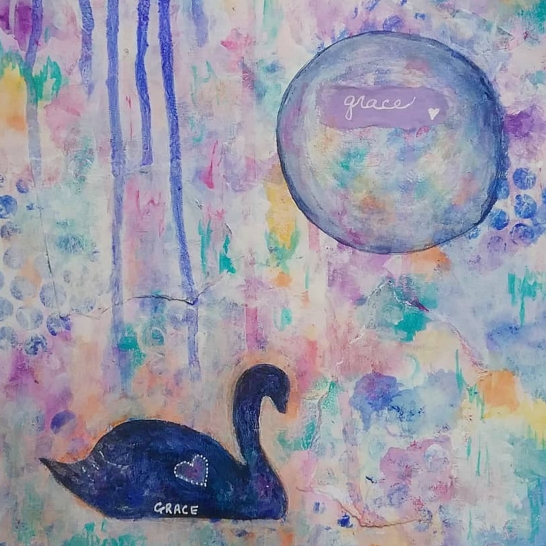
So I keep coming back to giving myself grace. Or trying to, at least.
Giving myself grace and space and time to grieve the losses in my life. Giving myself grace and forgiveness for not meeting some self-imposed ideal of what my writing or productivity should look like. And giving myself grace and permission to honor my personal rhythms… whether that’s with my writing, or dealing with life in general, or going through a day.
And giving myself grace to do it all imperfectly.
How about you? Do you need to give yourself more grace? Do you need to do more honoring of your needs and your feelings and your rhythms?
If so, I hope you’ll do just that.
♥
My art journaling page from early 2020 for my word-of-the-year – grace.






You must be logged in to post a comment.